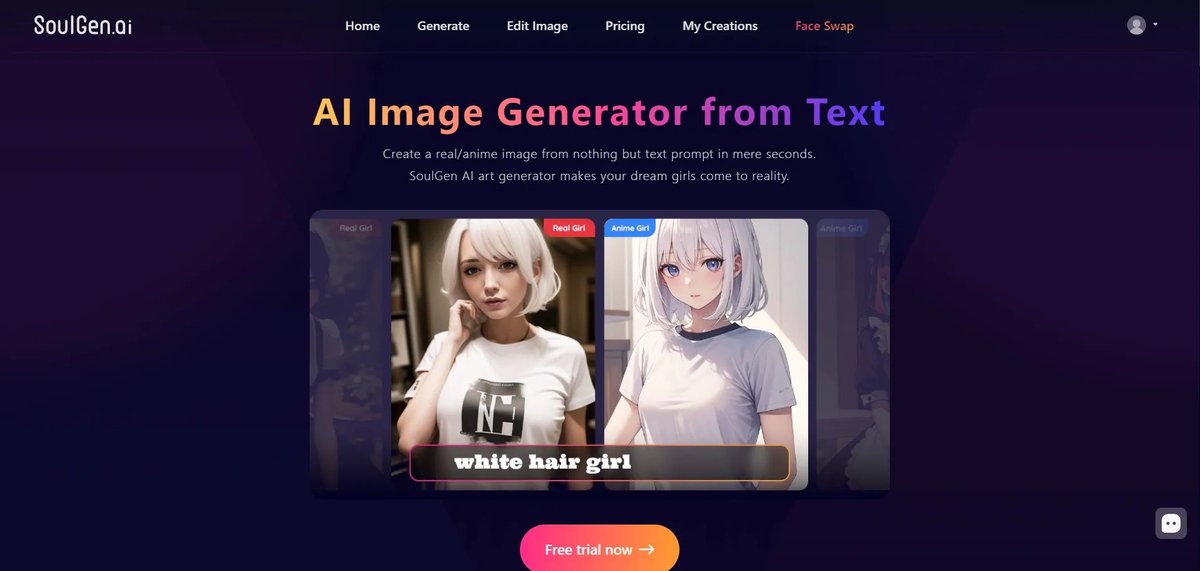
The rise of generative AI has reshaped countless industries, but few areas ignite as much intense debate and public concern as the rapidly evolving landscape of open-source AI NSFW generators. We're talking about machine learning systems that can conjure incredibly realistic, explicit, or otherwise "Not Safe For Work" content – from images and video to audio and text – often with just a few typed words. This isn't just a niche corner of technology; it's a powerful, accessible frontier that offers both creative liberation and unprecedented risks, pushing the boundaries of what's possible and what's permissible.
The implications are profound, touching on everything from artistic expression and personalized entertainment to deeply troubling issues of privacy, consent, and exploitation. As these tools become more sophisticated and user-friendly, the urgency for a balanced, informed discussion has never been greater.
At a Glance: Understanding Open-Source AI NSFW Generators
- What they are: AI models (like diffusion models) capable of generating explicit or adult content from text prompts, images, or other inputs. "Open-source" means their code and models are often publicly available, making them accessible to a wide audience.
- The Power: They enable rapid, high-quality content creation, offering tools for adult entertainment, artistic exploration, and personalized experiences (when legal and consensual).
- The Peril: Significant risks include the creation of nonconsensual deepfakes, potential exploitation of minors, severe privacy violations, and the normalization of harmful content.
- Key Challenge: Balancing the benefits of open innovation and creative freedom with the critical need for ethical guardrails, robust safety measures, and legal accountability.
- Your Role: Whether you're a developer, platform operator, or user, understanding these tools means recognizing both their potential and your responsibility in shaping their impact.
The Dual Nature of Generative NSFW AI: From Creative Expression to Exploitation
NSFW AI broadly describes machine-learning systems designed to generate, classify, filter, or moderate content considered "Not Safe For Work." This spectrum includes models that create adult images or text, as well as those designed to identify and flag explicit material, or even detect manipulated sexual images and deepfakes.
At its core, the technology leverages advanced generative models like Generative Adversarial Networks (GANs) and diffusion models. These algorithms excel at synthesizing realistic images, audio, and video from simple text prompts, existing media, or even abstract concepts. The speed and affordability of this creation process are revolutionary, opening doors to new forms of adult entertainment, artistic exploration, and hyper-personalized digital experiences.
Consider the creative possibilities: artists using AI to generate intricate, fantastical scenes that would be impossible to photograph or paint conventionally. Content creators can accelerate their workflow, producing diverse visual narratives tailored to specific aesthetic tastes. In regulated, consensual contexts, this technology could unlock entirely new forms of interactive storytelling.
However, this same technological prowess carries immense risks. The very features that make these tools powerful for legitimate uses can be weaponized for malicious purposes. The ease with which realistic, explicit content can be generated, often featuring individuals without their consent, has raised urgent alarms across society.
Common Use Cases: Where AI NSFW Generators Find a Home
To truly grasp the landscape, it's important to understand where these generators are currently being deployed. Their applications span a broad spectrum, reflecting both the positive and negative facets of the technology:
- Adult Content Production: AI assists artists and creators in the adult entertainment industry with generating backgrounds, character concepts, intricate scene details, or even entire narrative sequences. It can streamline production, making content creation faster and more diverse.
- Personalized Experiences: In legal and strictly consensual frameworks, AI can tailor adult content to individual preferences, offering unique and highly customized visual or narrative experiences.
- Moderation and Safety Tools: Ironically, some of the most critical applications involve using NSFW AI to combat harmful content. Platforms employ advanced classifiers to detect, remove, or age-restrict explicit material, protecting users and maintaining community standards.
- Detection of Manipulation: Specialized tools flag deepfakes and edited images. These are vital for protecting victims of image-based abuse, helping to identify synthesized content and providing evidence for legal action.
The existence of powerful open-source models for NSFW generation means that the barriers to entry for these use cases—both constructive and destructive—are significantly lowered. This accessibility demands heightened vigilance and responsibility from all parties involved.
Unpacking the Urgent Harms: A Reckoning with AI's Dark Side
While the creative potential is undeniable, the most pressing conversations surrounding open-source AI NSFW generators revolve around the profound ethical and safety risks they introduce. These aren't hypothetical scenarios; they are harms already impacting individuals and society.
- Nonconsensual Content: This is arguably the most pervasive and devastating risk. AI makes it shockingly easy to generate sexual images or videos of individuals—including public figures, colleagues, friends, or even strangers—without their knowledge or consent. The resulting reputational damage, psychological trauma, and emotional distress for victims can be catastrophic. Imagine seeing yourself in explicit content you never created or consented to; the violation is immense.
- Exploitation of Minors: Perhaps the gravest ethical breach is the potential for these tools to produce sexual content involving minors. This is not only illegal across virtually all jurisdictions but also morally reprehensible. Developers have an absolute, non-negotiable duty to prevent their models from being trained on such datasets or generating such outputs. Any failure here is a profound societal breakdown.
- Privacy and Reputational Damage: Even without explicit sexual content, deepfakes or doctored images can be used to humiliate, slander, or damage an individual's career and relationships. The erosion of trust in digital media has wide-reaching societal consequences, making it harder to discern truth from fabrication.
- Normalization of Abuse: When tools for generating exploitative material are readily available and easy to use, it risks lowering the threshold for engaging in harmful behavior. This normalization can desensitize individuals to the severity of image-based abuse and contribute to a culture where such acts are perceived as less egregious.
- Moderation Gaps: Automated filters, while powerful, are not infallible. They can produce false positives (blocking legitimate content) or, more dangerously, false negatives (failing to catch harmful content). These gaps leave victims vulnerable and can erode public trust in platforms claiming to protect their users.
- Harmful Stereotypes and Discrimination: AI models learn from the data they're fed. If training datasets contain biased or exploitative content, the models can perpetuate or even amplify harmful stereotypes, glorify violence, or promote illegal and unethical acts at an unprecedented scale. This can reinforce existing prejudices and create new forms of digital discrimination.
- Bias in Training Data: This underpins many of the issues above. Models trained on biased or non-consensual datasets can inadvertently perpetuate these problems, leading to outputs that are sexist, racist, or otherwise discriminatory. The very foundation of these models must be rigorously vetted for ethical integrity.
The Cutting Edge: AI Video Generation and Escalating Concerns (May 2025 Perspective)
As we look to the near future (and as of May 2025, in some cases, the present), AI's capabilities in video generation are expanding dramatically, further amplifying both the potential and the perils of NSFW content. What was once the realm of still images is now seamlessly extending into dynamic, believable video.
- Text-to-Video Synthesis: Imagine typing a detailed scene description and having AI render coherent video sequences with smooth motion, incredibly believable textures, and precise control over character expressions. This is no longer science fiction. Advanced models can take intricate textual prompts and translate them into moving pictures, maintaining visual consistency across frames.
- Image-to-Video Transformation: Existing images can now be animated, transformed, or seamlessly incorporated into new video sequences. This allows for complex visual compositions, such as "Lego Pixel image processing" for unique aesthetics or "multi-image fusion" to combine elements from various sources into a single, cohesive video narrative.
- Temporal Coherence: A significant leap has been maintaining consistency. Modern AI video generators ensure character appearance, scene integrity, and action flow remain coherent across multiple frames or clips through sophisticated techniques like "task consistency and continuous keyframes." This makes generated videos incredibly difficult to distinguish from real footage.
- Model Diversity and Customization: Platforms now offer a vast array of AI models (often "101+") tailored for specific stylistic outputs, specialized generation tasks, and the ability to handle "multiple scenes, multiple styles, multiple themes." Critically, these platforms often boast "fast generation" capabilities, turning complex prompts into videos in minutes, not hours.
- Community-Driven Creation: Many advanced platforms feature a "Community Market" where users can "train your own model" and "publish models for others to use." This fosters niche content creation and can even involve "revenue sharing" for popular models. While this democratizes access and innovation, it also means the proliferation of diverse models, some of which may be designed with malicious intent. For those interested in the technical backbone and community-driven aspects, The AI NSFW generator GitHub hub is often where these developments find their earliest public roots and shared knowledge.
- Assistive Features: AI assistants, like NolanAI mentioned in research, provide intelligent creation suggestions, further lowering the barrier to entry for even novice creators.
- Robust Infrastructure: Underpinning these capabilities are scalable backends (e.g., NestJS, PostgreSQL, Cloudflare storage) and specialized task queues (e.g., AIGC task queue for GPU management) designed to handle the computationally intensive demands of high-quality video generation. This industrial-strength infrastructure makes widespread, rapid video generation a reality.
These advancements mean that the challenge of identifying and combating nonconsensual or exploitative content escalates dramatically. A convincing deepfake video carries far more weight and potential for harm than a still image, demanding equally sophisticated and proactive countermeasures.
Charting a Responsible Course: Technical and Policy Approaches to Reduce Harm
Given the escalating capabilities and risks, developing robust technical and policy safeguards isn't just an option—it's an imperative. Stakeholders from developers to governments must collaborate on a multi-pronged strategy to mitigate the harms associated with open-source AI NSFW generators.
Building Safeguards into the System
- Data Hygiene and Curation: The quality and ethical sourcing of training data are paramount. Developers must implement strict protocols to avoid training on content scraped without clear consent. More importantly, datasets must rigorously exclude any content depicting minors, even if age is ambiguous. If there's doubt, it's out.
- Robust Moderation Pipelines: Relying solely on automated filters is insufficient. Platforms need layered moderation systems that combine sophisticated AI classifiers with human review. This means multi-stage filtering: initial coarse detection, followed by specialized checks for consent signals, face-matching against consent databases, and metadata analysis.
- Watermarking and Provenance: To combat deepfakes, embed tamper-resistant digital watermarks or unique metadata in all generated media. These "digital fingerprints" can help detect synthetic content and trace its origin. Adopting industry-wide provenance standards is crucial for establishing content origin tracking.
- Age and Consent Verification: Where adult-oriented content is involved, implementing strong age-gating and identity verification processes is non-negotiable. For any likeness appearing in explicit content, documented, explicit consent must be obtained and auditable.
- Safety-by-Design Model Limits: Developers should build in limitations directly into the AI models themselves. This means blocking or refusing prompts that request sexual content featuring public figures, minors, or scenarios that clearly imply non-consensual acts. Providing safe defaults and requiring explicit opt-in controls for adult-generation features empowers users while upholding ethical boundaries. For those diving into the code, implementing these limits is a core part of building a responsible AI NSFW generator GitHub project.
- Deepfake Detection Tools: Continuous investment in and improvement of tools designed to detect manipulation artifacts, inconsistencies, or statistical fingerprints indicative of synthetic media is vital. These tools serve as a crucial defense mechanism against malicious content.
Policy and Ethical Frameworks for Accountable AI
- Clear and Enforced Community Guidelines: Platforms hosting or enabling AI content generation must have explicit, unambiguous policies against non-consensual intimate imagery, hate speech, and other harmful content. These guidelines must be vigorously enforced with swift consequences for violations.
- Transparency and Accountability: Developers and platforms need to be transparent about the capabilities and limitations of their AI tools. Equally important, they must be accountable for the content generated on their platforms, establishing clear channels for reporting abuse and providing redress for victims.
- International Collaboration: The internet knows no borders, and harmful AI-generated content can originate anywhere. Governments and regulatory bodies must collaborate internationally to establish common standards, legal frameworks, and enforcement mechanisms for AI-generated content across jurisdictions. This global effort is essential to prevent regulatory arbitrage and ensure comprehensive protection.
Legal and Ethical Duties: Beyond Compliance
Navigating the landscape of open-source AI NSFW generators isn't just about technical safeguards; it's deeply rooted in legal compliance and profound ethical duties.
Laws vary significantly by jurisdiction, but a universal principle stands: sexual content involving minors is criminalized globally. Similarly, the nonconsensual distribution of intimate imagery (often referred to as "revenge porn") is illegal in many countries, and its AI-generated equivalent falls squarely under this umbrella. Developers and platforms must be intimately familiar with and strictly adhere to the legal frameworks wherever their tools are accessible. Ignorance is not a defense.
Beyond legal mandates, there's a clear ethical imperative. Platforms and developers have a moral duty to minimize foreseeable harm. This includes:
- Ensuring Informed Consent: For any content featuring identifiable individuals, explicit, informed consent is not merely a legal requirement but a fundamental ethical principle.
- Respecting Privacy: Protecting user data and preventing the unauthorized use of likenesses for content generation is crucial.
- Providing Remediation Channels: When harm does occur, platforms must offer rapid, accessible, and effective channels for victims to report abuse, request content removal, facilitate takedowns, and even receive support for identity restoration if their likeness has been exploited. This means making the process visible, easy to understand, and swift in its execution.
The ethical responsibility extends to the very design philosophy of these tools. An ethical approach means prioritizing human safety and dignity over unrestrained innovation, especially when that innovation carries a high risk of exploitation and abuse.
Practical Guidance: Navigating the AI NSFW Frontier Responsibly
Regardless of your role in the AI ecosystem, understanding your responsibilities and taking proactive steps is crucial.
For Developers and Companies: Build with Integrity
You are at the forefront of this technology, and your choices shape its impact.
- Prioritize Safety-by-Design: From the very first line of code, integrate restrictive content policies and safety filters. Hard-code limitations that prevent the generation of illegal or deeply harmful content (e.g., involving minors, nonconsensual deepfakes of identifiable individuals).
- Document Dataset Provenance: Keep meticulous records of where your training data comes from. Ensure it's ethically sourced, consented, and free of exploitative material. If your model or dataset is open-source, make this provenance transparent. A thorough understanding of the training data is critical for any developer contributing to an AI NSFW generator GitHub project.
- Integrate Human Review: Even the best AI moderation needs human oversight. Plan for human review in your content moderation pipelines, especially for edge cases or flagged material.
- Plan for Incident Response and User Redress: Have clear, accessible processes in place for users to report abuse, request takedowns, and receive support if they are victimized by content generated by your tools. This isn't an afterthought; it's a core operational necessity.
- Engage with Policy Makers: Actively participate in discussions with governments and regulatory bodies to help shape informed, effective policies that balance innovation with safety.
For Platforms and Moderators: Curate a Safe Environment
You are the gatekeepers, responsible for the digital spaces you cultivate.
- Adopt Layered Moderation: Combine automated detection tools with trained human moderators. Implement multi-stage filtering that progressively scrutinizes content for compliance with your guidelines.
- Clearly Communicate Rules: Make your community guidelines explicit, easy to find, and simple to understand. Educate your users about what is and isn't allowed, and the consequences of violation.
- Make Reporting and Takedown Processes Fast and Visible: Ensure that users can easily report harmful content and that those reports are acted upon swiftly. Transparency around your moderation efforts builds trust.
- Invest in Victim Support: Beyond content removal, consider how your platform can support victims of image-based abuse, whether through providing resources, legal information, or direct assistance in removing content from other platforms.
For Consumers and Creators: Act with Conscience
Your choices determine the demand and acceptance of these technologies.
- Be Cautious with Manipulation Tools: Understand the power of tools that can alter images or generate intimate content. Even if your intentions are benign, consider the potential for misuse or misunderstanding.
- Never Create, Share, or Endorse Nonconsensual Content: This is the golden rule. Under no circumstances should you generate, distribute, or promote explicit content of someone without their explicit, unambiguous consent. This applies to public figures as much as private individuals.
- Verify and Question: When you encounter explicit content online, especially if it seems suspicious or out of character, question its authenticity. Deepfake technology is incredibly advanced; cultivate a healthy skepticism.
- If Targeted, Act Immediately: If you are a victim of AI-generated manipulation, preserve evidence (screenshots, URLs, etc.), and use platform reporting channels immediately. Report to law enforcement if appropriate. Seek support from victim advocacy groups.
- Support Responsible Development: Gravitate towards platforms and open-source projects that demonstrate a clear commitment to ethical AI development, robust safety features, and user protection. Your engagement can shape the future of tools found in places like the broader AI NSFW generator GitHub community.
The Path Forward: Balancing Innovation with Inherent Responsibility
Exploring open-source AI NSFW generators reveals a technology at a profound ethical crossroads. It's a testament to human ingenuity, offering unprecedented creative power and personalization. Yet, it simultaneously confronts us with some of the most challenging questions of our digital age: how do we protect privacy and consent when images and videos can be fabricated with ease? How do we foster innovation while rigorously guarding against exploitation and abuse, especially of the most vulnerable?
The impact of NSFW AI hinges entirely on how it is designed, regulated, and ultimately used. Responsible handling demands a concerted, multi-faceted effort: strong technical safeguards built directly into the models, clear and enforceable policies from platforms, adherence to legal frameworks, and, perhaps most importantly, an unwavering ethical commitment to consent and safety from every stakeholder—developers, companies, platforms, and individual users.
Regulatory frameworks, both national and international, must be agile and adaptive, evolving at the pace of technological innovation to ensure that protection doesn't lag behind creation. The conversation isn't about stifling innovation, but about steering it towards a future where powerful AI tools can enrich our lives without compromising our fundamental human dignity and security. This is a shared responsibility, and the urgency of our action today will define the ethical landscape of tomorrow's AI.